A sudden gush of water behind a wall or a flooding garden is a homeowner’s worst nightmare. In the Logan region, burst pipe repairs are a frequent necessity due to local environmental factors and aging infrastructure. Whether it’s a pinhole leak or a major rupture, the speed at which you respond determines the extent of the water damage your property sustains. Understanding why these incidents occur is the first step in protecting your home and ensuring you aren’t caught off guard by a massive utility bill.
Prevention and maintenance are key to avoiding the stress of emergency plumbing issues. If you are noticing fluctuations in water temperature or strange noises from your hardware, it might be time to inspect your Hot Water Systems. Keeping your heating units and connected pipework in top shape is one of the most effective ways to reduce the likelihood of a high-pressure failure that leads to a catastrophic burst.
Why Pipe Failures Occur in Logan
Logan’s unique geography and climate play a significant role in the health of residential plumbing. While many homeowners assume pipes simply “wear out,” several specific catalysts often trigger the need for burst pipe repairs.
Environmental Factors
The ground beneath your feet is more active than you might think. Logan is known for its reactive clay soils, which expand and contract significantly based on moisture levels.
Soil Movement and Expansion
When the soil shifts during heavy rain or intense dry spells, it exerts immense pressure on buried pipes. This movement can cause PVC or copper lines to bend, crack, or snap entirely.
Tree Root Intrusion
Logan’s lush greenery is beautiful, but tree roots are relentless in their search for moisture. Even the smallest hairline crack in a pipe can attract roots, which eventually grow inside the line, causing a massive blockage and a subsequent burst due to internal pressure.
Plumbing System Vulnerabilities
Internal factors within your home’s infrastructure are just as likely to cause issues as external environmental threats.
High Water Pressure
Many areas in Logan experience high mains water pressure. While great for showers, excessive pressure puts constant stress on joints and valves. Over time, these components weaken, leading to a sudden rupture.
Corrosion and Aging Pipes
Older homes in Logan suburbs may still feature galvanized steel or thin-walled copper pipes. As these materials age, they corrode from the inside out, thinning the metal until it can no longer contain the water flow.
Signs You Need Urgent Burst Pipe Repairs
You don’t always see a fountain of water when a pipe fails. Often, the signs are subtle until the damage is already done. Identifying these early can save you thousands in restoration costs.
Visible and Audible Clues
- Damp patches: Unexplained wet spots on carpets, walls, or ceilings.
- Hissing sounds: The sound of running water behind walls when all taps are turned off.
- Discoloured water: Rusty or brownish water indicating internal pipe corrosion.
- Mold growth: Rapidly appearing mold or a persistent musty odor.
Performance and Cost Indicators
If your plumbing is failing, your bills and your tap performance will usually tell the story before you see the water.
Sudden Drop in Water Pressure
If your shower suddenly turns into a drizzle, water is likely escaping the system before it reaches your faucet. This is a primary indicator that burst pipe repairs are required immediately.
Skyrocketing Water Bills
A significant jump in your quarterly water statement without a change in usage is a “silent” sign of an underground leak.
Immediate Steps to Take When a Pipe Bursts
When water is flowing into your living room, every second counts. Following a structured plan can mitigate damage while you wait for burst pipe repairs to be carried out.
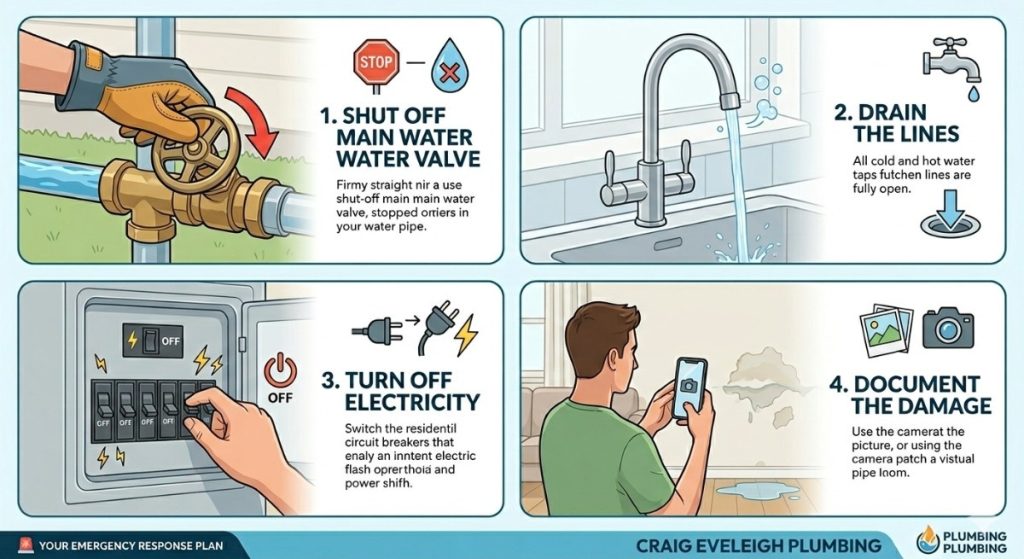
The Emergency Protocol
- Shut off the Main Water Valve: Usually located near your front boundary. Turn it clockwise to stop all water flow to the house.
- Drain the Lines: Open all cold water taps to drain the remaining water in the system and relieve pressure.
- Turn off Electricity: If the leak is near power points or appliances, shut off the electricity at the breaker box.
- Document the Damage: Take photos and videos for insurance purposes before you start cleaning up.
Managing the Water
Use buckets, mops, and towels to contain the spread. If a ceiling is sagging, carefully poke a small hole in the center with a screwdriver to let the water drain into a bucket; this prevents the entire ceiling from collapsing under the weight.
Professional Solutions for Leaking Pipes
While DIY fixes are tempting, professional burst pipe repairs are the only way to ensure the structural integrity of your plumbing. For more information on Australian plumbing standards and homeowner responsibilities, you can visit the Queensland Building and Construction Commission.
Diagnostic Technology
Modern plumbers use non-invasive tools to find leaks without tearing up your backyard or smashing through walls.
Thermal Imaging and Acoustic Detection
Plumbers use thermal cameras to see temperature differences behind walls and acoustic microphones to “listen” for the vibration of escaping water. This precision allows for targeted burst pipe repairs.
Repair Methods
The type of repair depends on the location and severity of the burst.
| Repair Method | Best Used For | Durability |
| Pipe Patching | Small cracks or localized holes | Medium |
| Pipe Relining | Underground pipes damaged by roots | High (No digging) |
| Full Replacement | Extensively corroded or aged systems | Highest |
| Sectional Repair | Replacing a specific broken segment | High |
Why You Should Choose Local Specialists
Logan’s plumbing infrastructure has specific quirks. Hiring a local expert for burst pipe repairs ensures that the person fixing your home understands the local water table, soil conditions, and council regulations.
24/7 Emergency Response
Pipes don’t just burst between 9 AM and 5 PM. Emergency burst pipe repair Logan services are essential because water damage happens in real-time. A local plumber can often be at your door within the hour, preventing thousands of dollars in structural rot.
Comprehensive Damage Mitigation
A professional doesn’t just fix the pipe; they help with water damage restoration Logan. This involves checking for moisture trapped in floorboards and ensuring that the electrical system hasn’t been compromised by the leak.
Preventing Future Pipe Bursts
The best way to handle burst pipe repairs is to ensure you never need them in the first place. A proactive approach to plumbing can extend the life of your pipes by decades.
Routine Maintenance Checklist
- Pressure Limiting Valves: Have a plumber install a PLV to keep your home’s pressure at a safe level (usually 500kPa).
- Flexi-Hose Inspections: Check the braided hoses under your sinks for fraying or rust every six months.
- Winter Protection: Although Logan is warm, occasional cold snaps can cause older pipes to contract and crack.
- Tree Management: Keep large trees with aggressive roots away from your main sewer and water lines.
Upgrading Old Infrastructure
If your home was built several decades ago, consider an urgent pipe replacement for the most vulnerable sections of your network. Replacing old galvanized steel with modern PEX or high-grade copper is an investment that adds value and security to your property.
The True Cost of Delaying Repairs
Ignoring a small leak is a recipe for disaster. What starts as a minor drip can quickly escalate, requiring extensive residential plumbing repairs Logan homeowners aren’t prepared for.
Structural Integrity Risks
Water weakens timber framing and causes drywall to crumble. If water gets under your foundation, it can lead to “slab heave,” which is a significantly more expensive fix than simple burst pipe repairs.
Health Hazards
Stagnant water from a burst pipe becomes a breeding ground for mold and mildew within 24 to 48 hours. This can lead to respiratory issues for your family, making a quick fix a matter of health as much as it is a matter of home maintenance.
Burst Pipe Repairs: DIY vs. Professional Plumbing Services in Logan
When faced with a sudden plumbing emergency in Logan, your first instinct might be to reach for a wrench and a roll of plumbers’ tape. However, the decision between attempting a DIY fix for a burst pipe and calling in the professionals can have a significant impact on your home’s safety and your bank account. Understanding the limitations and risks of each approach is essential for any Logan homeowner.
The Temptation and Risks of DIY Burst Pipe Repairs
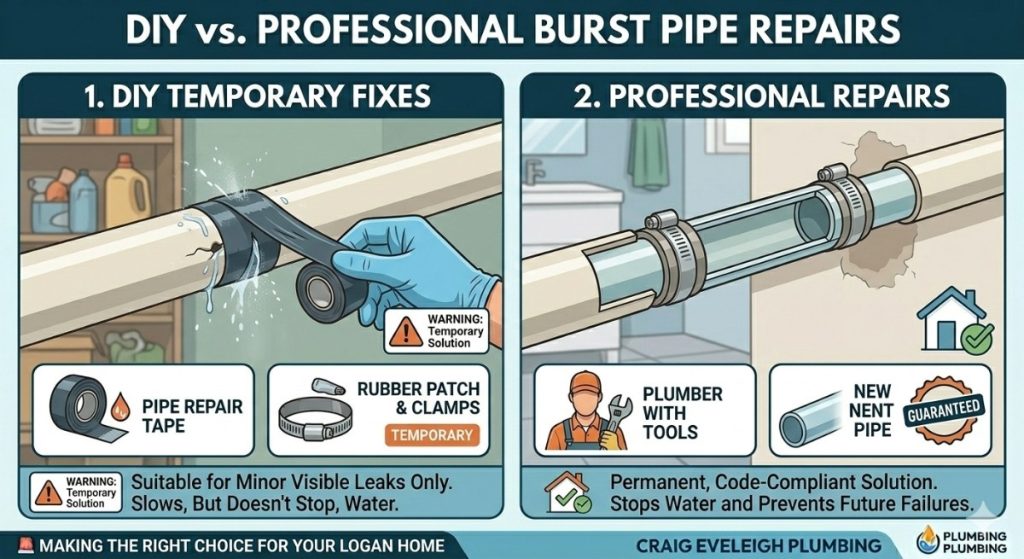
While small plumbing jobs like fixing a leaky faucet can often be handled by a handy homeowner, burst pipe repairs are in an entirely different league. Attempting to fix a ruptured pipe yourself, without the necessary expertise and equipment, carries substantial risks.
One of the most significant dangers of a DIY approach is incomplete or inadequate repair. What might seem like a simple leak to an untrained eye could be a symptom of a much larger, systemic plumbing issue in your Logan home. Without proper diagnosis, you might only fix the immediate problem, leaving the underlying cause to worsen, potentially leading to a much more severe and expensive burst pipe down the road.
Furthermore, DIY repairs often lack the durability of professional work. Temporary patches, such as clamps or epoxy, are not long-term solutions and are prone to failing under pressure. This can lead to re-flooding and even more extensive water damage, nullifying any initial savings. Perhaps most critically, incorrect pipe material selection or improper joint connections can weaken the overall plumbing system, creating new vulnerabilities.
The Benefits of Choosing Professional Plumbing Services in Logan
For a reliable and long-lasting solution, especially for a complex issue like a burst pipe, engaging a licensed Logan plumbing service is always the smartest choice. Professional plumbers offer a level of expertise and service that DIY simply cannot match.
Licensed and insured Logan plumbers have undergone rigorous training and have extensive experience in diagnosing and repairing all types of pipe failures. This ensures they can accurately identify the root cause of the problem and implement a comprehensive solution, preventing future issues. They also have access to professional-grade tools and equipment, such as leak detection technology and advanced repair kits, which are not available to the general public. This allows for a much faster, cleaner, and more efficient repair process.
Perhaps most importantly, professional plumbing services in Logan offer guarantees and warranties on their workmanship and materials. This provides you with invaluable peace of mind, knowing that if the repair fails within a certain period, the plumbing company will return to fix it at no additional cost. Furthermore, a professional repair ensures your plumbing system remains compliant with local Logan building codes, which is essential for home safety and insurance purposes.
Finding the Right Balance
While burst pipe repairs are overwhelmingly better handled by professionals, there are still a few safe and effective DIY actions Logan homeowners can take in a plumbing emergency. The most critical step is to quickly and safely turn off the main water valve to your home, which immediately stops the flooding and minimizes damage. You can also drain the remaining water in the pipes by opening the lowest faucets in your home.
Ultimately, the choice between DIY and professional plumbing for burst pipe repairs in Logan is about prioritizing long-term safety and financial stability over a temporary, often-problematic, quick fix. While the upfront cost of a professional plumber may be higher, it is an investment that protects your home and provides peace of mind, making it the clear choice for any discerning Logan homeowner.
Conclusion
Dealing with a plumbing emergency is never easy, but knowing the causes and solutions for burst pipe repairs gives you the upper hand. By staying vigilant for early warning signs and understanding the unique environmental challenges in Logan, you can protect your home from the devastating effects of water damage. Remember, the key to a successful repair is speed and professional expertise—never settle for a temporary fix when the structural integrity of your home is at stake.
If you suspect a leak or are currently facing a plumbing crisis, don’t wait for the damage to worsen. Our team is ready to provide expert assistance and peace of mind with our comprehensive plumbing services. Contact us today to get a quote today and secure your home against future leaks.
Frequently Asked Questions
What should I do first if a pipe bursts in my Logan home?
The very first step is to turn off your main water supply at the meter to stop the flow. Once the water is off, open your taps to drain the remaining pressure and call a professional for burst pipe repairs immediately to assess the damage.
How much do burst pipe repairs usually cost in Logan?
The cost varies depending on the pipe’s location and the extent of the damage. Minor repairs might cost a few hundred dollars, while major underground replacements or “no-dig” relining can be more significant. It is always best to get a professional onsite quote.
Does homeowners insurance cover burst pipes?
Most standard insurance policies cover “sudden and accidental” water damage caused by a burst pipe. However, they may not cover the repair of the pipe itself if the burst was caused by long-term neglect or lack of maintenance.
How can I tell if a pipe has burst underground?
Look for unusually lush or green patches of grass, soggy spots in your yard during dry weather, or a significant, unexplained increase in your water bill. These are classic signs that you need a plumber to perform leak detection.
Are certain types of pipes more prone to bursting?
Yes, older galvanized steel pipes are highly prone to internal corrosion, while older “Poly B” (grey plastic) pipes have a history of becoming brittle over time. Modern copper and PEX piping are generally much more resilient.
How long does a typical burst pipe repair take?
A standard localized repair can often be completed within 2 to 4 hours. However, if the pipe is located under a concrete slab or requires extensive excavation, the process may take a full day or longer to complete properly.