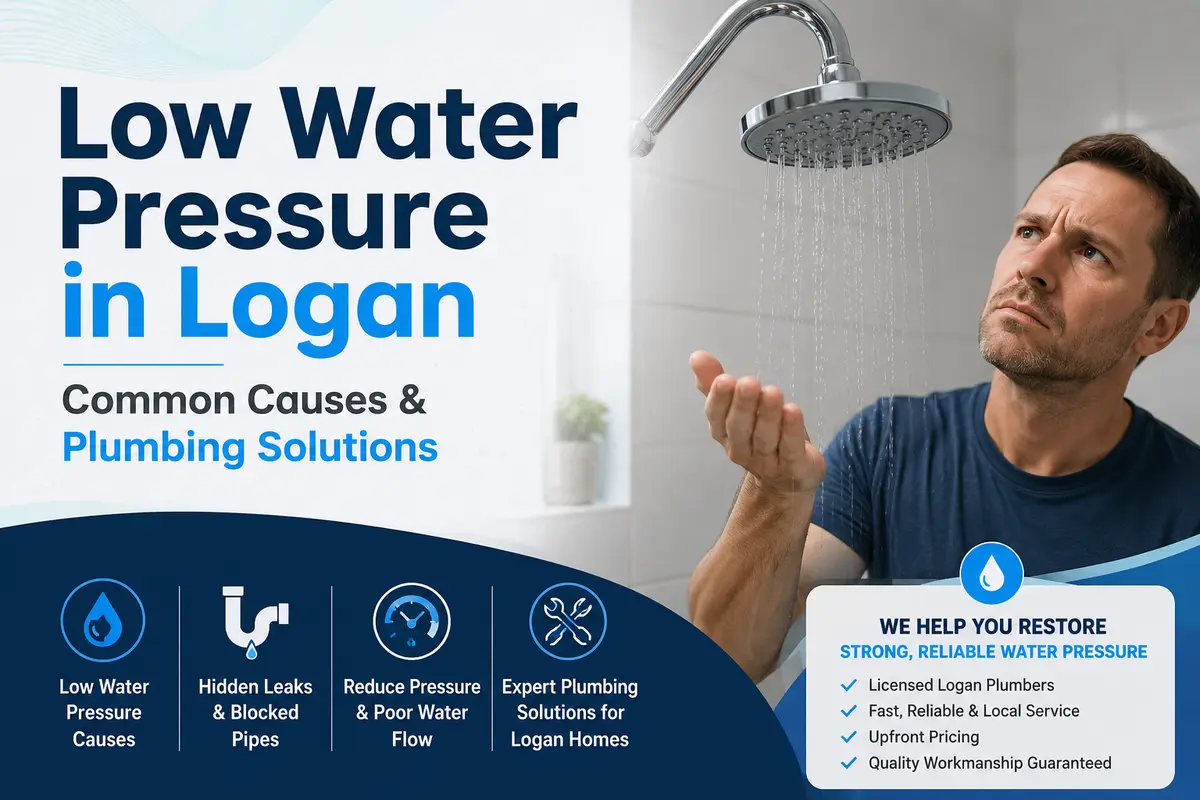
Have you ever turned on the shower expecting a refreshing start to the day, only to be greeted by a disappointing trickle? You’re not alone. Low Water Pressure is one of the most common plumbing frustrations for homeowners across Logan, and it always seems to happen at the worst possible moment. Whether you’re washing dishes after dinner or trying to rinse shampoo from your hair before work, poor water flow can quickly turn simple daily routines into unnecessary hassles.
Sometimes the problem is as straightforward as a blocked tap aerator. Other times, it points to hidden plumbing faults that deserve immediate attention. In many Logan homes, unnoticed leaks, ageing pipes, or underground damage gradually reduce water flow long before homeowners realise what’s happening. If you’re concerned about hidden leaks, our professional water leak detection service can help identify the problem before it causes expensive damage.
This guide explains the most common low water pressure causes, how to recognise early warning signs, and what you can do before calling a professional plumber. I’ll also explain when DIY fixes are worthwhile-and when it’s smarter to let an experienced plumber take over.
What Does Low Water Pressure Actually Mean?
Most people describe Low Water Pressure as “the taps just aren’t flowing properly,” but there is a little more to it than that. Water pressure refers to the force that pushes water through your home’s plumbing system. When that pressure drops below normal levels, every tap, shower, washing machine and outdoor hose can be affected.
The issue may involve your entire house or just a single fixture. If every tap is struggling, the source is often somewhere within the property’s plumbing system or the main supply. If only one bathroom or kitchen tap is affected, the fault is usually much more localised.
Many homeowners assume the local water supplier is responsible whenever they notice low water pressure in house plumbing. While scheduled maintenance occasionally causes temporary changes, internal plumbing faults are far more common than most people realise. That’s why identifying the true source early is so important.
Why Logan Homes Experience Water Pressure Problems
Logan continues to grow rapidly, with suburbs featuring everything from established family homes to newly developed estates. This mix of old and new infrastructure means water pressure problems can arise for several different reasons.
Older properties often contain ageing galvanised pipes that slowly corrode from the inside. As mineral deposits build up over many years, the internal diameter becomes smaller, reducing water flow throughout the home. Newer homes aren’t immune either. Poor installation, hidden leaks, faulty pressure reducing valves or damaged fittings can all create similar symptoms.
Local environmental conditions also play a role. Heavy rainfall, shifting soil and invasive tree roots occasionally affect underground plumbing, creating hidden restrictions that reduce water pressure without obvious warning signs.
Fortunately, identifying the cause early usually makes repairs far more affordable than waiting until a major plumbing failure occurs.
The Most Common Low Water Pressure Causes in Logan Homes
Most cases of Low Water Pressure fall into a handful of common categories. While every property is different, experienced plumbers usually begin by checking these possibilities first.
- Hidden water leaks reducing available pressure throughout the property.
- Corroded or ageing pipes restricting water flow.
- Blocked pipes caused by mineral deposits or debris.
- Faulty pressure reducing valves.
- Partially closed isolation valves.
- Water supply issues affecting the local neighbourhood.
- Damaged underground pipework.
- Failing hot water units affecting only hot water outlets.
Although these issues produce similar symptoms, the repair method varies significantly. That’s why guessing often leads to unnecessary expense, while proper diagnosis saves both time and money.
Hidden Leaks: The Silent Cause of Weak Water Flow
One of the biggest misconceptions I hear is that every plumbing leak leaves obvious puddles. In reality, many leaks remain hidden for months behind walls, beneath slabs or underneath gardens. During that time, valuable water escapes before it ever reaches your taps.
Even a relatively small leak can gradually reduce pressure across multiple fixtures while increasing your water bills at the same time. You might notice your shower feels weaker, outdoor taps lose force, or the washing machine takes longer to fill.
Common warning signs include:
- Higher-than-normal water bills.
- Damp patches appearing indoors.
- Water meter movement when no water is being used.
- Mould or musty smells.
- Gradually worsening Low Water Pressure.
Ignoring these symptoms often allows the damage to spread beyond the plumbing itself. Moisture can weaken building materials, encourage mould growth and increase repair costs dramatically.
Blocked Pipes Can Restrict Water Flow More Than You Think
Many people associate blocked pipes with slow drains, but internal pipe restrictions can also reduce water pressure throughout the home. Mineral build-up, sediment accumulation and corrosion slowly narrow the inside of water pipes until flow becomes noticeably weaker.
Australian water naturally contains dissolved minerals. Over time, these minerals attach themselves to internal pipe surfaces. In older homes, decades of build-up can leave surprisingly little room for water to travel freely.
Typical signs include inconsistent flow between different taps, noisy plumbing, reduced shower performance and fluctuating pressure during peak usage.
Rather than simply treating the symptom, professional plumbers investigate where the restriction occurs before recommending cleaning or replacement. In many cases, targeted repairs restore normal performance without replacing an entire plumbing system.
If ongoing plumbing faults are affecting multiple fixtures around your home, our general plumbing services in Logan provide comprehensive inspections and long-term solutions tailored to local properties.
Is It Only the Hot Water?
Here’s a useful question many plumbers ask early in the inspection:
“Does the problem affect both hot and cold water?”
If cold water flows normally but hot water struggles, the issue often lies within the hot water system rather than the household plumbing network. Sediment accumulation inside storage tanks, ageing valves or partially blocked pipework can all reduce hot water flow without affecting the cold supply.
This distinction helps narrow the diagnosis quickly and prevents unnecessary excavation or pipe replacement.
| Symptom | Likely Cause | Recommended Action |
| Low pressure on both hot and cold water | Hidden leak, blocked pipes, pressure valve, supply issue | Full plumbing inspection |
| Low pressure on hot water only | Hot water system fault | Inspect hot water unit |
| One tap affected | Local blockage or faulty fitting | Repair or replace fitting |
| Whole house affected suddenly | Supply interruption or major plumbing fault | Immediate professional assessment |
Fortunately, many hot water-related pressure issues can be resolved before they develop into complete system failures.
When Pipe Repairs Become the Best Long-Term Solution
Not every case of Low Water Pressure can be solved with a simple valve adjustment or pipe cleaning. Sometimes the plumbing system has simply reached the end of its working life. Older homes across Logan often contain ageing pipework that has been exposed to decades of wear, mineral build-up, and ground movement.
Corroded pipes gradually become narrower, reducing water flow throughout the house. In some situations, small cracks or deteriorating joints allow water to escape before it reaches your taps. This is why recurring water pressure problems shouldn’t be ignored, even if they seem minor at first.
If inspections reveal damaged pipework, timely pipe repairs Logan can restore reliable water flow while preventing larger plumbing emergencies later. Replacing only the affected section is often more cost-effective than waiting for a complete pipe failure.
Can You Improve Water Pressure Yourself?
There are a few simple checks you can safely perform before calling a plumber. While these won’t solve every problem, they may help identify obvious issues.
You can try the following:
- Check whether the main water isolation valve is fully open.
- Clean blocked tap aerators and shower heads to remove mineral deposits.
- Compare water pressure at several taps throughout the home.
- Ask nearby neighbours if they’re experiencing similar supply issues.
- Monitor your water meter for unexplained movement when no water is being used.
If none of these checks improves the situation, the problem is likely hidden within the plumbing system. Continuing to guess can sometimes make repairs more expensive than necessary.
Around the middle of any investigation, it’s also worth understanding your responsibilities as a homeowner. The Australian Government’s drinking water information and guidance explains how Australia’s water systems are managed and why maintaining private plumbing remains an important part of household safety.
Why Professional Diagnosis Matters
Low Water Pressure often looks simple from the outside, but experienced plumbers know that similar symptoms can have completely different causes.
For example, two homes may both have weak shower pressure. One could have a partially closed pressure reducing valve, while the other has an underground water leak beneath the driveway. Treating the wrong problem wastes both time and money.
A professional inspection may include:
- Pressure testing across the plumbing system.
- Electronic leak detection equipment.
- Valve and regulator inspections.
- Internal camera inspections where appropriate.
- Pipe condition assessments.
- Water flow measurements throughout the property.
Using specialised equipment allows plumbers to pinpoint faults accurately without unnecessary excavation or guesswork.
Why Choosing a Licensed Plumber in Logan Makes a Difference
Plumbing isn’t just about fixing today’s problem-it’s about preventing tomorrow’s. That’s why choosing a licensed plumber Logan homeowners trust can save considerable stress over the long term.
A qualified local plumber understands the types of plumbing systems commonly found across Logan suburbs. They know how ageing infrastructure, local soil conditions, seasonal weather patterns and council requirements can all influence residential plumbing performance.
Working with an experienced local professional also means repairs comply with Australian plumbing standards while addressing the root cause rather than simply masking the symptoms.
If your hot water pressure is also inconsistent, it may be worth learning more about hot water systems in Logan homes before deciding whether repairs or replacement will deliver the best long-term outcome.
When Should You Call a Plumber Immediately?
Sometimes Low Water Pressure is merely inconvenient. Other times, it signals a plumbing problem that shouldn’t wait.
You should arrange professional assistance if:
- Water pressure suddenly drops throughout the entire house.
- Water bills increase without explanation.
- Damp patches or mould begin appearing.
- You hear running water when every tap is turned off.
- Rust-coloured water accompanies reduced pressure.
- Multiple plumbing fixtures lose pressure simultaneously.
Early intervention often prevents small plumbing faults from becoming major property repairs.
Keeping Your Home’s Water Pressure Healthy
Like servicing your car before a long road trip, regular plumbing maintenance helps prevent unexpected breakdowns. Most homeowners rarely think about their pipes until something stops working, but preventative maintenance can significantly reduce future repair costs.
Simple habits such as fixing dripping taps promptly, monitoring your water bills, flushing older hot water systems when recommended, and arranging periodic plumbing inspections all contribute to maintaining consistent water pressure.
Many plumbing issues develop gradually over several years. Catching them early usually means faster, less expensive repairs and fewer disruptions to everyday life.
Conclusion
Low Water Pressure is more than a daily annoyance-it can be an early warning sign of hidden plumbing faults, ageing pipework, blocked pipes or water leaks. Understanding the possible causes allows you to act early, minimise repair costs and keep your home’s plumbing operating efficiently. While simple maintenance may solve minor issues, persistent or widespread pressure loss is best investigated by an experienced professional who can accurately diagnose the underlying problem.
If you’re experiencing ongoing Low Water Pressure or other plumbing issues in Logan, don’t wait until a minor inconvenience turns into an expensive repair. The experienced team at Craig Eveleigh Plumbing is ready to help with expert inspections, reliable repairs and practical advice tailored to your home. Contact our Logan plumbers today to restore strong, consistent water pressure and enjoy complete peace of mind.
Frequently Asked Questions
What is the most common cause of Low Water Pressure in Logan homes?
The most common causes include hidden leaks, ageing pipes, blocked pipes, faulty pressure reducing valves and internal corrosion. While temporary supply issues occasionally occur, most ongoing Low Water Pressure originates within the property’s own plumbing system.
Can a hidden leak reduce water pressure throughout my house?
Yes. Even relatively small hidden leaks can reduce available water flow across multiple fixtures. If water escapes before reaching your taps, showers and appliances, you’ll often notice weaker pressure along with higher water bills.
How do I know whether the problem is my plumbing or the water supplier?
If nearby neighbours are experiencing the same issue, it could be related to the local supply. However, if only your property is affected, the cause is usually internal plumbing. A licensed plumber can quickly determine the difference through pressure testing and inspection.
Can blocked pipes cause Low Water Pressure?
Absolutely. Mineral deposits, sediment, corrosion and debris can gradually restrict the inside of water pipes, reducing flow throughout the house. Professional cleaning or pipe repairs may be required depending on the severity of the blockage.
Is Low Water Pressure considered an emergency?
Not always. However, if pressure suddenly drops throughout your home, you notice water damage, hear running water behind walls or experience a significant increase in water bills, you should arrange a plumbing inspection as soon as possible to prevent further damage.