An Emergency Blocked Drain situation can strike at the worst possible moment—late at night, during a family gathering, or right when you’re preparing to leave for work. When drains stop working, it isn’t just an inconvenience; it can lead to overflowing water, foul smells, property damage, and potential health hazards. To mitigate these risks, many property owners rely on Professional Plumbing Services to restore their systems quickly and safely. Understanding how to identify, prevent, and resolve an Emergency Blocked Drain is essential for every homeowner and business owner.
In this comprehensive guide, you’ll learn the major causes behind sudden drain blockages, early warning signs, prevention tips, the best treatment options, and when it’s necessary to contact a professional plumber. Whether it’s your kitchen, bathroom, stormwater, or sewer line, this guide will help you handle any Emergency Blocked Drain with confidence and clarity.
What Is an Emergency Blocked Drain?
An Emergency Blocked Drain occurs when water flow is completely obstructed and the issue requires immediate attention. This usually results in overflowing fixtures, sewage backup, or severe drainage failure. Unlike minor blockages, emergency cases cannot be postponed or handled casually. They demand professional attention to prevent structural damage and health risks.
- Emergency blockages can occur in:
- Kitchen sinks
- Bathroom drains
- Toilets
- Floor drains
- Stormwater drains
- Sewer systems
Common Causes of an Emergency Blocked Drain
Most emergency blockages begin as minor issues that grow worse over time. Here are the primary causes:
1. Tree Root Infiltration
Tree roots naturally seek moisture and often invade underground pipes. Over time, they expand, break the pipe, and completely clog drainage systems—resulting in an Emergency Blocked Drain.
2. Grease & Fat Build-Up
Kitchen drains commonly clog due to accumulated grease. When hot oil cools, it solidifies inside pipes, restricting water flow.
3. Foreign Objects
Wet wipes, sanitary items, nappies, and paper towels can easily become lodged in pipes, creating a rapid blockage.
4. Collapsed or Damaged Pipes
A broken or collapsed pipe prevents water from flowing, instantly creating an emergency situation.
5. Heavy Rain & Stormwater Overload
Stormwater drains can flood quickly during rainfall, especially when gutters or outdoor drains haven’t been cleaned.
6. Hair, Soap Scum & Mineral Deposits
Bathroom drains often clog from combined buildup, causing slow drainage that can quickly turn into an Emergency Blocked Drain.
Early Warning Signs of an Emergency Blocked Drain
Recognizing warning signs early can help you prevent a full-blown emergency.
- Slow drainage in sinks or showers
- Gurgling noises from pipes
- Unpleasant sewer odours
- Water pooling near drains
- Toilet water rising unusually high
- Backflow in multiple drains
If you observe any of these red flags, the issue may escalate into an Emergency Blocked Drain if not addressed promptly.
Why Emergency Blocked Drains Are Dangerous
Ignoring or delaying treatment of an Emergency Blocked Drain can lead to:
- Property flooding
- Structural damage
- Electrical hazards
- Contaminated water exposure
- Sewer backup
- Mould growth
Because of these risks, emergency blockages should always be treated as urgent plumbing concerns.
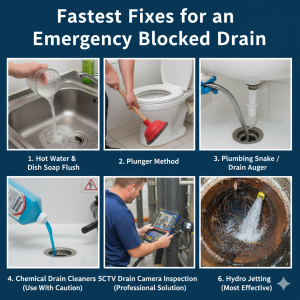
Fastest Fixes for an Emergency Blocked Drain
When faced with an Emergency Blocked Drain, here are the most effective solutions:
1. Hot Water & Dish Soap Flush (Temporary Fix)
This can help break down grease clogs in kitchen drains. However, it is not sufficient for severe blockages.
2. Plunger Method
A plunger creates pressure that can dislodge minor blockages. It’s effective for sinks and toilets but won’t fix deep pipe issues.
3. Plumbing Snake / Drain Auger
A drain snake helps break apart debris lodged deeper within pipes. However, professional use is recommended for safety.
4. Chemical Drain Cleaners (Use With Caution)
Chemicals can dissolve organic matter but may damage pipes if overused. They are not suitable for frequent blockages.
5. CCTV Drain Camera Inspection (Professional Solution)
Professionals use drain cameras to identify hidden causes such as tree roots or pipe collapses this is vital for accurately diagnosing an Emergency Blocked Drain.
6. Hydro Jetting (Most Effective)
Hydro jetting involves blasting high-pressure water through pipes to remove grease, sludge, and root intrusion. It is one of the best long-term solutions for an Emergency Blocked Drain.
7. Pipe Relining
If the blockage is caused by damaged or cracked pipes, relining is a non-invasive repair method that restores pipe structure without excavation.
Best Practices to Prevent an Emergency Blocked Drain
Preventing blockages is easier and cheaper than dealing with an emergency. Here’s how:
Do Not Flush Harmful Items
Avoid flushing wipes, sanitary products, cotton buds, and nappies.
Dispose of Grease Properly
Pour kitchen grease into a container instead of your sink.
Install Drain Screens
Screens catch hair, food particles, and debris before they enter drains.
Schedule Annual Drain Maintenance
Professional inspection prevents sudden issues and helps identify buildup early.
Trim Trees Near Plumbing Lines
Tree roots are a leading cause of sewer blockages.
Clean Gutters Regularly
This prevents stormwater overflow during rainfall.
How to Identify the Source of an Emergency Blocked Drain
Identifying the exact source of an Emergency Blocked Drain can save time, money, and prevent unnecessary damage. While some blockages are easy to trace, others may be hidden deep within the plumbing system. Here’s how you can determine where the problem is coming from:
1. Check Which Fixtures Are Affected
If only one fixture (like a kitchen sink) is blocked, the issue is likely in the immediate pipe. But if multiple fixtures are backing up at the same time, it indicates a deeper sewer or stormwater problem.
2. Listen for Unusual Sounds
Gurgling noises are a strong indicator of trapped air caused by a severe blockage. These sounds usually occur when you flush a toilet or run water in the sink and point to an upcoming Emergency Blocked Drain.
3. Note Any Strong Odours
Sewer-like smells usually mean that wastewater isn’t flowing properly. This can indicate a blockage in the main sewer line or vent pipe.
4. Check Outdoor Drainage Areas
Inspect stormwater drains, gutters, and outdoor pits. Overflow or slow drainage outside can mean tree root invasion or heavy buildup in the external pipes.
5. Test Water Levels in the Toilet
The toilet is often the best indicator of a severe blockage. Higher-than-normal water levels or slow flushing nearly always suggest an Emergency Blocked Drain somewhere in the sewer pipe.
Knowing the source of obstruction helps plumbers diagnose the issue faster, ensuring a more efficient and reliable repair.
Costs Involved in Fixing an Emergency Blocked Drain
The cost of fixing an Emergency Blocked Drain varies depending on the severity, location, and tools required. Below is a breakdown of the typical pricing so homeowners can be financially prepared.
1. Standard Drain Clearing
For simple blockages in sinks or toilets, the cost may range between $100 to $250. These are usually resolved using a plunger or basic drain auger.
2. Hydro Jetting Services
Severe blockages that require high-pressure jetting typically cost between $300 to $600, depending on how long the cleaning takes.
3. CCTV Drain Camera Inspection
To precisely diagnose the cause of an Emergency Blocked Drain, a drain camera inspection might cost $120 to $250. This is often the most reliable way to identify deeper issues like broken pipes or root invasion.
4. Pipe Relining or Repairs
If the blockage is caused by a damaged or collapsed pipe, repairs can cost anywhere from $500 to $4,000+, depending on the length and depth of the affected section. Pipe relining tends to be more cost-effective than full excavation.
5. Emergency Call-Out Fees
Since emergency plumbing requires fast response and urgent labour, call-out fees may fall in the range of $150 to $300, especially for late-night or weekend services.
Even though costs can vary, dealing with an Emergency Blocked Drain promptly is much more cost-effective than ignoring the problem and facing property damage later.
Professional Help for an Emergency Blocked Drain
When DIY methods fail, or when the blockage occurs in the sewer line, only a licensed plumber can provide a long-term solution. Experienced plumbers use advanced tools like CCTV drain cameras, water jetters, and pipe relining systems to thoroughly clear and repair drainage systems.
You can learn more about sewer drain problems and solutions by reading educational resources on websites like NSW Fair Trading and Plumbing Industry Commission.
Conclusion
An Emergency Blocked Drain is more than a simple inconvenience—it can pose serious risks to your property, health, and safety. By understanding the causes, identifying warning signs early, and applying proper preventive measures, you can significantly reduce your chances of experiencing sudden drain failure. If you are currently facing an urgent drainage issue, don’t hesitate to Contact us for immediate assistance. When emergencies strike, contacting professional plumbers ensures quick diagnosis, safe treatment, and long-term protection for your home or business.
Whether it’s a kitchen sink, bathroom drain, stormwater pit, or sewer line, always treat an Emergency Blocked Drain as a priority. The faster you act, the easier and cheaper the repair process will be.
FAQs
1. What should I do first during an Emergency Blocked Drain?
Turn off water usage, avoid flushing toilets, and call a licensed plumber immediately to prevent flooding and damage.
2. Are chemical cleaners safe for emergency blockages?
Chemical cleaners may help minor clogs, but overuse can corrode pipes. They are not recommended for recurring or severe blockages.
3. What causes sudden blocked drains?
Tree roots, grease buildup, foreign objects, broken pipes, and heavy rain are the most common triggers of an Emergency Blocked Drain.
4. How long does it take to clear an Emergency Blocked Drain?
Professionals can usually resolve it within 1–2 hours, depending on the severity and location of the blockage.
5. Can I prevent future emergency blockages?
Yes—regular plumbing maintenance, drain screens, proper disposal habits, and CCTV inspections can dramatically reduce drain emergencies.